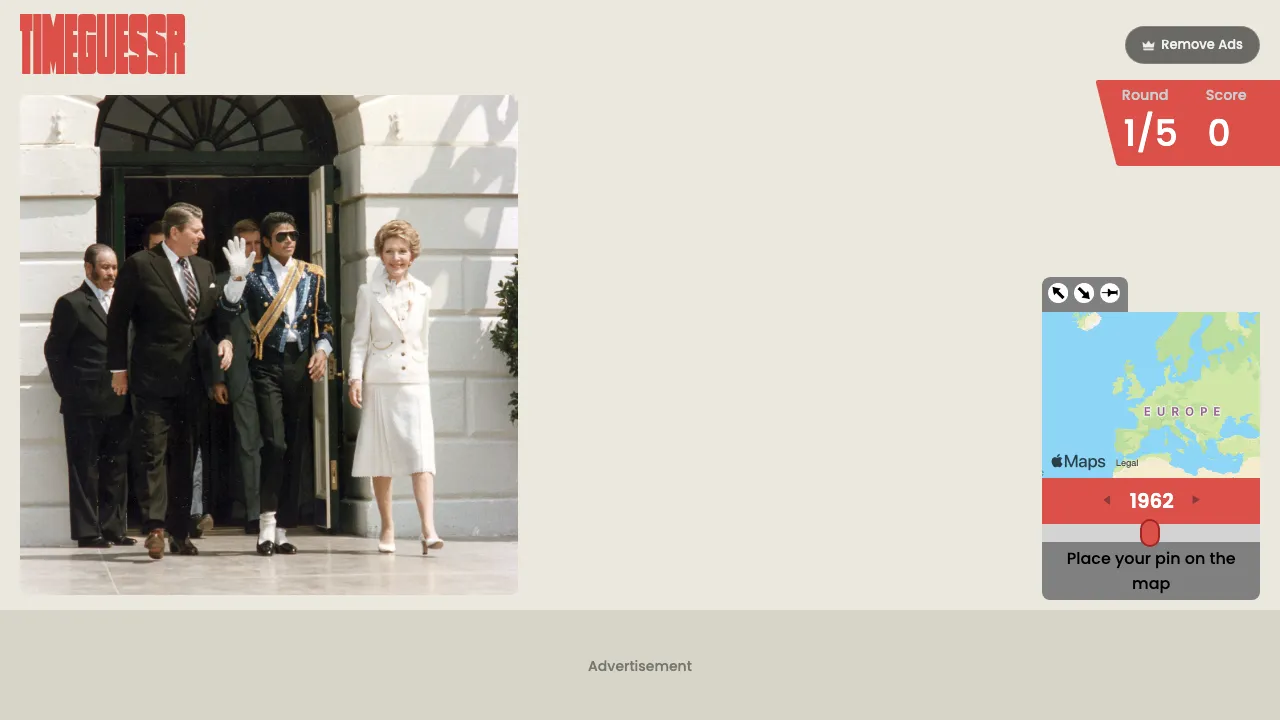
What is whentaken?
WhenTaken drops you in front of a photograph with two questions and almost no mercy: Where was this taken, and when? There is no caption to rescue you. A tram, hairstyle, storefront, license plate, road marking, film grain, or distant landmark might be the clue that separates a near-perfect answer from a guess on the wrong continent. The challenge combines visual history with geography. Each daily game contains five photo rounds, and every round asks you to estimate both a location and a year. That makes WhenTaken especially satisfying when several weak clues suddenly connect: the cars suggest the 1970s, the architecture feels Eastern European, and one tiny sign finally tells you where to drop the pin.
whentaken Strategy & Tips
Date the technology first. Cars, buses, streetlights, phones, advertising styles, military equipment, and camera quality often narrow the possible period faster than clothing alone. Separate construction date from photo date. A medieval church can appear in a photograph taken in 2015. Ask when the image was captured, not when the objects in it were built. Read the road. Driving side, lane markings, signs, bollards, traffic lights, license plates, and road surfaces can eliminate huge parts of the world before you recognize a landmark. Zoom your attention, not just the image. Tiny clues are often decisive: a flag in a window, partial business name, transit logo, mountain profile, language fragment, or distinctive street sign. Think in ranges before choosing a year. Instead of instantly committing to 1974, first decide whether the photo feels like 1965–1980. Then use smaller clues to tighten the estimate. Protect both halves of the score. WhenTaken rewards balanced detective work. Knowing the exact city but missing the date by decades — or perfectly dating an image while choosing the wrong continent — leaves a large number of points behind.