What Is Echo Chess?
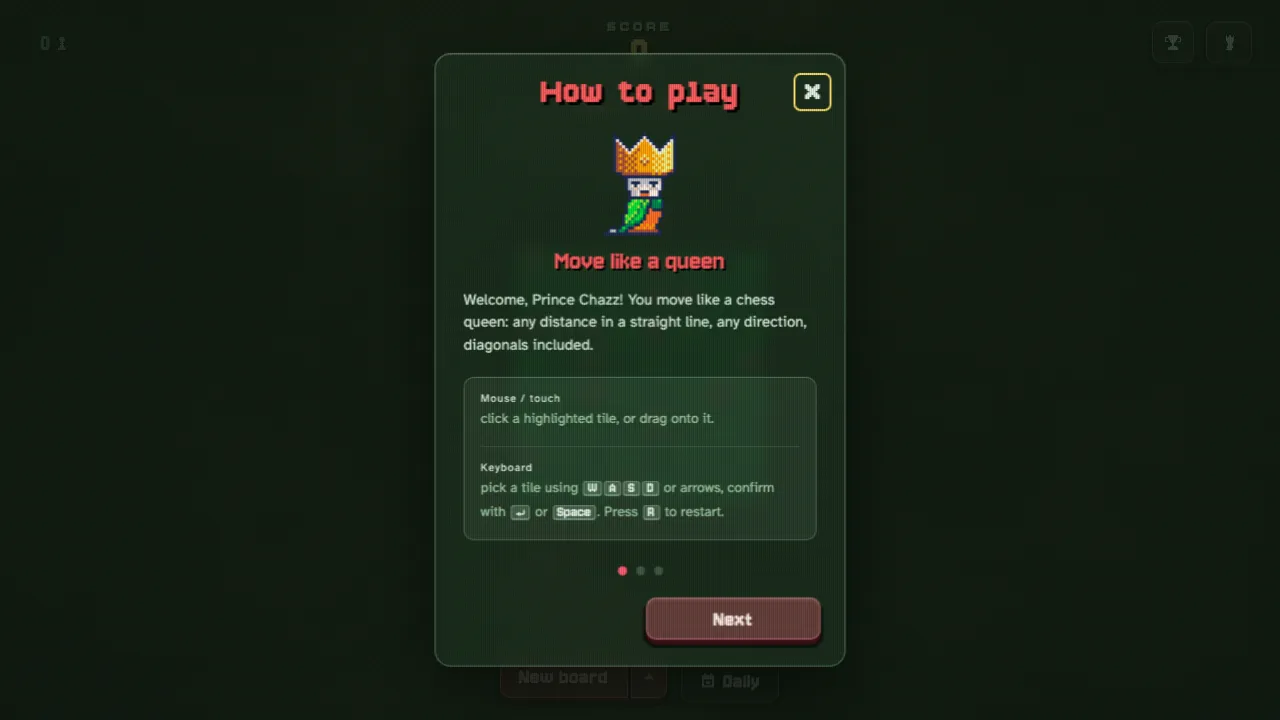
Echo Chess begins with recognizable chess movement and then changes the identity of your active piece after every capture. Take a rook and you become a rook; capture a knight next and your available movement changes again. The goal is to clear the puzzle by finding a legal capture sequence through this chain of transformations. Each position is less about conventional checkmate and more about planning a route through movement types. The board may contain a tempting nearby capture that leaves your new piece unable to reach anything else. A correct path accounts for the square you land on, the movement pattern you inherit, and the pieces that will still remain after the board changes.
How to Play Echo Chess
- Identify the piece you currently control and list every legal capture from its square.
- For each candidate, imagine becoming the captured piece on the destination square.
- Check whether that new movement pattern can continue the chain toward the remaining targets.
- Choose a sequence that clears the required pieces without stranding your active piece.
What Makes Echo Chess Stand Out
The phrase 'you are what you eat' becomes a complete puzzle system here. Familiar chess pieces remain readable, but their roles are temporary, making even experienced players reconsider basic geometry. Echo Chess therefore welcomes chess knowledge without depending on opening theory, clocks, or an opponent.
Strategy Tips for Echo Chess
- Work backward from isolated pieces and ask which inherited movement type could reach them.
- Treat knights as special connectors because their jump can escape blocked lines but may also strand you.
- Before taking a long-range piece, inspect the destination square for useful files and diagonals.
- When a route fails late, change the earliest capture that determined the wrong identity rather than replaying blindly.
Who Will Enjoy Echo Chess?
Echo Chess is excellent for chess players seeking an unconventional solo puzzle and for logic fans who know how the six pieces move. You do not need competitive chess experience, but understanding legal movement makes the transformation rule much easier to explore.