What Is Artle?
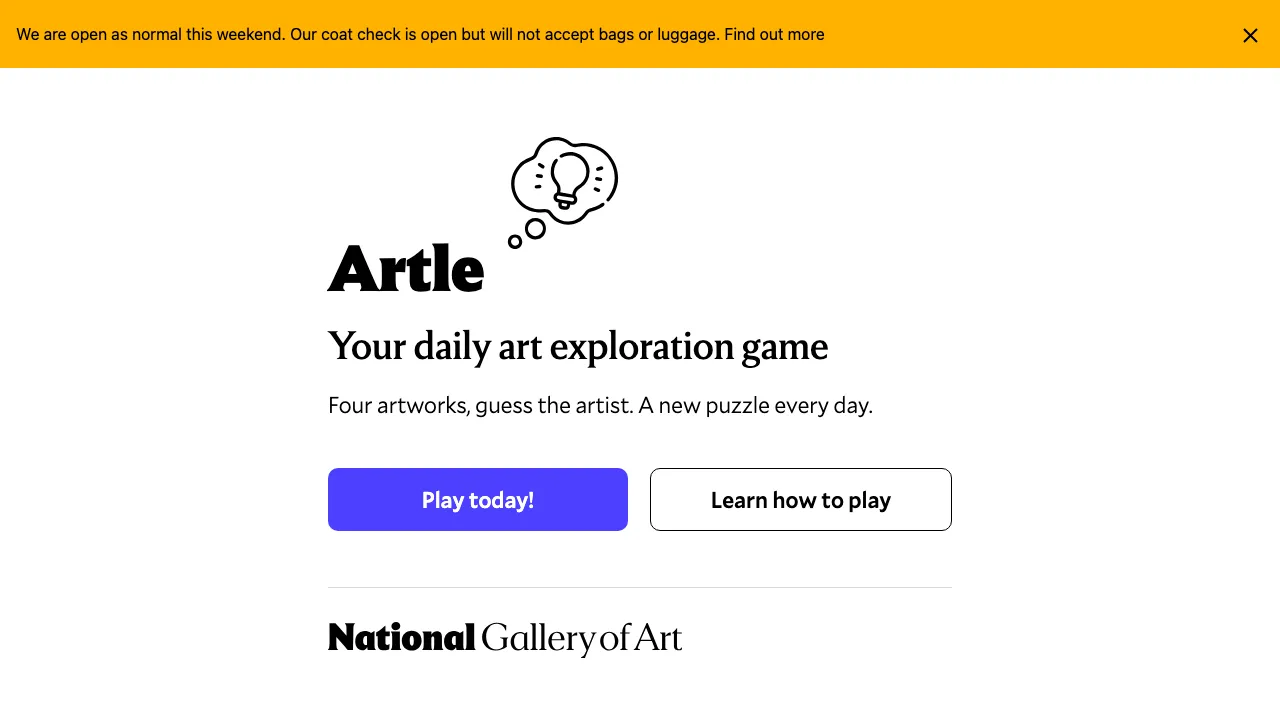
Artle is a daily art guessing game created by the National Gallery of Art. Each puzzle shows four artworks, and your goal is to identify the artist who made them. You get four guesses, one daily challenge, and a simple but surprisingly difficult test of visual memory and art knowledge. The game feels familiar if you enjoy Wordle-style daily puzzles, but instead of guessing a word, movie, song, or country, you study paintings, drawings, photographs, or other artworks and try to recognize the artist behind them. Artle is especially fun for players who enjoy art history, museum collections, visual clues, and daily brain teasers. Even if you do not know every artist, each round can teach you something about style, period, subject matter, and the National Gallery of Art collection.
How To Play Artle
Artle is easy to start, but hard to master: 1. Open the daily Artle puzzle. 2. Look carefully at the four artworks on screen. 3. Type the name of the artist you think created them. 4. Submit your guess. 5. You have up to four attempts to find the correct artist. 6. After the round ends, you can learn more about the artworks and the artist. The key challenge is that Artle does not give traditional letter clues. The artworks themselves are the clues. You need to judge the artist from visual style, color, composition, subject matter, medium, and historical period.
Why Artle Is Challenging
Artle is difficult because visual clues can be misleading. A soft landscape may suggest one Impressionist painter, while the correct answer may be another artist from the same period. A portrait, still life, or abstract work can also look familiar without immediately revealing its creator. The game rewards careful observation rather than quick guessing. Players need to compare all four artworks and look for repeated patterns, such as: - Brushwork and texture - Color palette - Common subjects - Historical period - Composition style - Medium or technique - Mood and visual rhythm This makes Artle more than a simple guessing game. It becomes a small daily exercise in looking closely.